


Electromagnetism
Electromagnetism: Electricity and Magnets
Most people rarely think about electricity and magnets as being related. However, in physics, they are understood as manifestations of the same fundamental force: electromagnetism.
The Fundamental Force
In the universe, there are four fundamental forces:
- Gravity, the attraction between objects with mass
- The strong nuclear force, which binds atomic nuclei together
- The weak nuclear force, involved in radioactive decay
- The electromagnetic force, which governs electricity, magnetism, light and many everyday phenomena
The electromagnetic force was first clearly understood in the 19th century. Two scientists were central to this discovery: the English physicist Michael Faraday and the Scottish physicist James Clerk Maxwell.
Electricity and Magnetism: The Connection
Two simple experiments demonstrate the relationship between electricity and magnetism.
First, magnetic materials such as black sand placed near a conducting wire will move when an electric current flows through the wire. This happens because the electric current generates a magnetic field.
Second, when a changing magnetic field is applied to a conductor, an electric current is produced. In other words, a changing magnetic field generates electricity.
Electromagnetism and the Earth
The Earth contains a molten outer core composed largely of iron and nickel. These metals flow in convection currents, creating a constantly changing magnetic field around the planet.
The south magnetic pole corresponds to the north geographic pole, and the north magnetic pole corresponds to the south geographic pole.
The Sun releases enormous amounts of energy through hydrogen fusion. Along with heat and light, it emits streams of charged particles known as the solar wind.
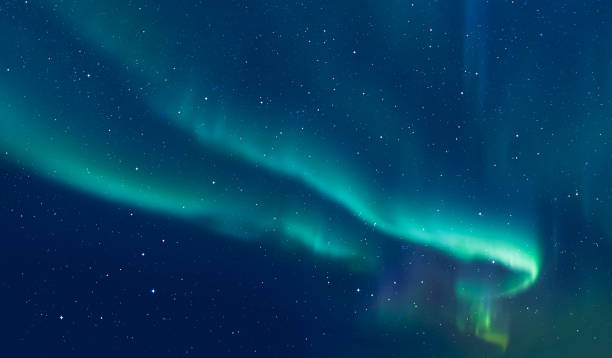
When these charged particles interact with Earth’s magnetic field, they are guided toward the polar regions. This interaction produces the auroras, also known as the northern and southern lights.
Electromagnetism and Energy Systems
Electromagnetism is the foundation of modern energy systems.
Wind turbines and hydroelectric turbines use renewable energy from nature to spin a generator. A generator consists of magnets rotating around a conductor. As the magnetic field rotates, an alternating electric current is induced in the conductor.
Electric motors operate on the same principle, but in reverse. An alternating electric current produces a changing magnetic field, which causes a magnet to move. This motion is converted into mechanical energy to drive wheels, fans and machinery.
Kawakawa Balm

The perfect balance between incredible versatility and technical care.
An emollient used to treat irritations of the skin associated with; dry skin, eczema, psoriasis, bites, burns and nappy rash.
Shop Now