


Mauao
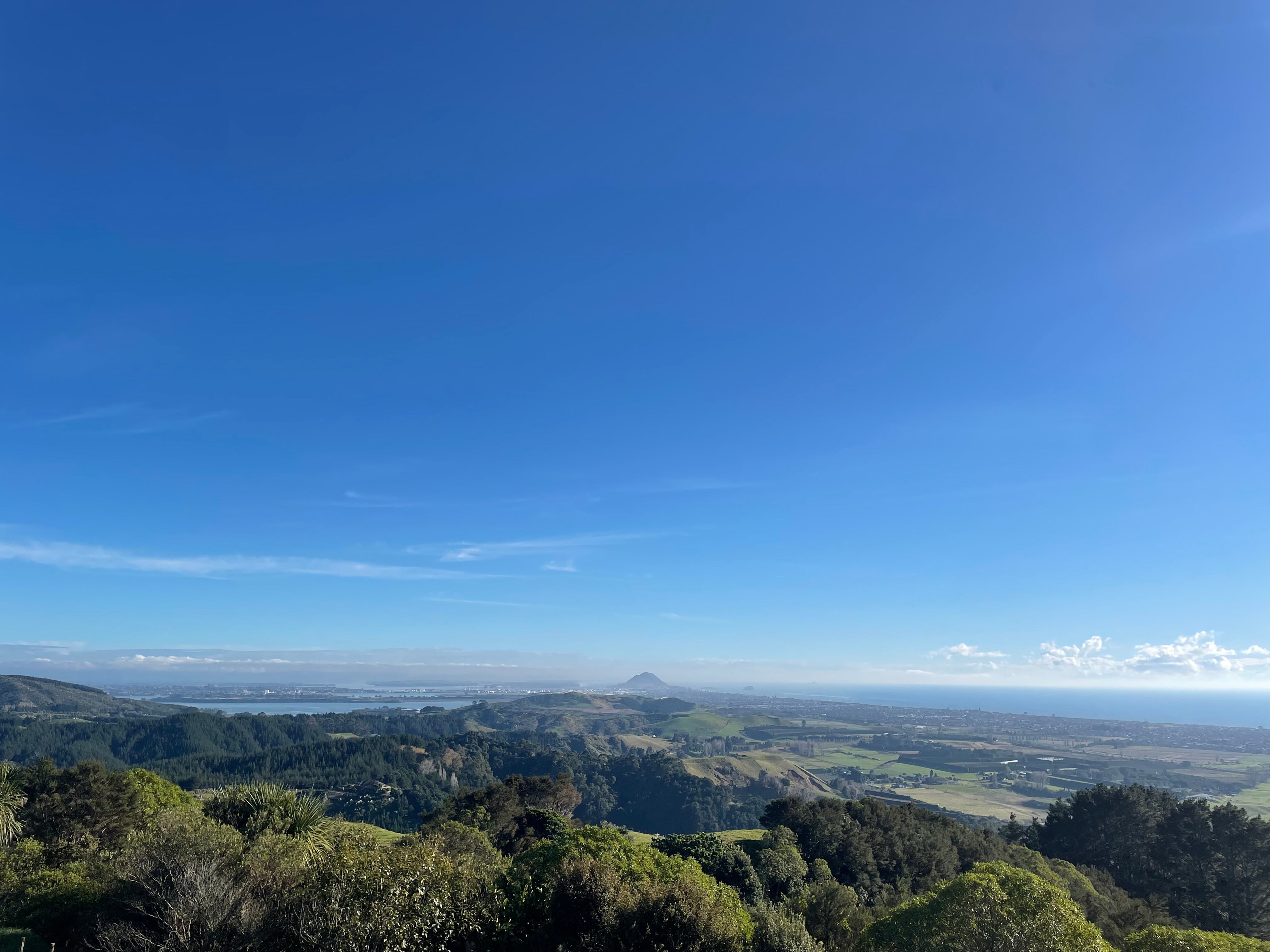
In https://aoteahealth.com/blogs/journal/the-intersection-of-land-whakapapa-and-purakau we discussed the origins of Māori place names. A culturally significant story lies behind the Māori name for Mount Maunganui, the extinct volcanic cone that stands sentinel over the sea entrance to Tauranga. Beyond being a stunning 232 metre volcano, with wonderful views of the Bay of Plenty from its summit, admired by residents of Tauranga and visitors alike, “the Mount,” as it is affectionately known, is alive with Māori myth and legend. It has another name in Māori, Mauao, which comes from the story.
Mauao once stood at the foot of the Kaimai Range. He was a nameless slave to the master Ōtanewainuku, a 640 metre rhyolitic dome approximately 43 kilometres north of Rotorua and 20 kilometres south of Tauranga. Immediately southwest of Ōtanewainuku stood a beautiful female mountain named Pūwhenua, cloaked in the virgin forest of Tāne Mahuta. The unnamed mountain was in love with Pūwhenua.
One day, the birds told the unnamed slave of the aroha whakaipo (romantic love) between Pūwhenua and Ōtanewainuku. His cries of grief could be heard far and wide.
The patupaiarehe, the flute-playing fairy folk, dwelling deep in the heart of the forest, took pity on the distraught mountain. “Pull me away from here, far beyond the tide, where the land is out of sight.”
They set to work weaving harakeke into taura (ropes) beneath the light of the moon. While the night was still thick, they lashed their taura around the forlorn mountain and began dragging him toward the sea, chanting a karakia as they went.
The land they covered was soon excavated by the weight of the mountain, and then filled with his tears. This was the awa of Waimapu. As they reached Hairini, the mountain saw Pūwhenua disappearing from sight. He extended his roots into the earth, trying to stop what he had initiated, but it only expanded the depression which filled with water and became the Waimapu Estuary.
They passed the Maungatapu Peninsula and the Matapihi Peninsula, grinding out Waipu Bay with his clutching for lost love. As the end of Te Papa Peninsula faded behind them, they neared the harbour mouth.
However, as they reached Te Moana-nui-a-Kiwa, Tama-nui-te-Rā awoke and brought haetea, the dawn, to Aotearoa. The patupaiarehe fled back to the forest. A mountain can only move once in its lifetime. The mountain was left where he stood, across a narrow channel from Te Matakana Island.
The patupaiarehe returned that night and named him Mauao, “te maunga i mau i te aonga o te rā.” The mountain caught by the dawn.
Kawakawa Balm

The perfect balance between incredible versatility and technical care.
An emollient used to treat irritations of the skin associated with; dry skin, eczema, psoriasis, bites, burns and nappy rash.
Shop Now