


Identifying and classifying native plants of Aotearoa
Angiosperms (Flowering Plants)
Angiosperms, or flowering plants, are the largest and most diverse group of plants in the world. Below is a glimpse of some prominent native angiosperms found in Aotearoa.
- Kōwhai produces bright golden-yellow, bell-shaped flowers that bloom in late winter and early spring. In Māori culture, kōwhai represents strength and courage.
- Pōhutukawa, the New Zealand Christmas tree, blooms with vivid red flowers in summer. Rātā also produces a haze of red flowers. Some pōhutukawa grow to enormous size, such as the protected tree in the Parnell Rose Gardens with sweeping branches that reach the ground.
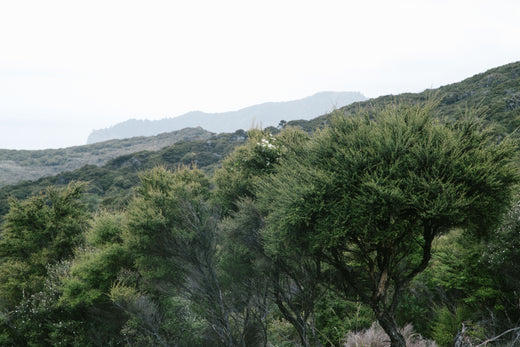
- Mānuka and kānuka have small white flowers. A helpful distinction is the phrase “kānuka kind, mānuka mean” — mānuka leaves have sharp tips, while kānuka leaves are rounded. Bees produce prized honeys from both species.
- Beech trees produce tiny flowers and form large forests in mountainous areas. Around 4.2 million hectares of New Zealand contain beech, with roughly 2 million hectares being pure beech forest.
- Flax species include mountain flax (Phormium cookianum), which has yellow flowers, and swamp flax or harakeke (Phormium tenax), which produces red flowers and has larger, rigid blades.
- Raupō (bulrushes) grow in wetlands (ngā repo), while tussock dominates high plateaus.
- Nīkau palms (Rhopalostylis sapida) are the world’s southernmost palm species. Their berries are a vital food source for birds such as kererū, which disperse the seeds through the forest.
Gymnosperms
Gymnosperms are plants that produce seeds not enclosed within a fruit. Native gymnosperms of Aotearoa include tōtara, kauri, mataī, miro, rimu, and kahikatea.
These trees are sometimes called rākau rangatira (trees of chiefly status) because they rise above the forest canopy. Most are conifers, reproducing through cones rather than flowers. They are ancient softwoods valued for timber and slow-burning firewood.
- Kahikatea is the tallest native tree, with some reaching 60 metres in height.
- Kauri is known for its massive straight trunk. Tāne Mahuta in Waipoua Forest is the fourth-largest tree in the world.
- Tōtara has peeling bark and light reddish timber, commonly found in lowland areas.
- Mataī is recognised by its flaking, hammer-marked trunk.
- Rimu has long, drooping branches and a graceful canopy form.
Ferns
Ferns produce feather-like leaves called fronds, which unfurl from a curled fiddlehead. Unlike flowering plants and conifers, ferns reproduce using spores rather than seeds.
Ferns predate flowering plants and date back to the Carboniferous era. Common native ferns include ponga, mamaku and whekī.
Mosses, Hornworts and Liverworts
Mosses, hornworts and liverworts (bryophytes) are abundant throughout Aotearoa. They grow on forest floors, tree trunks and stream edges and play a crucial role in carbon and water cycles.
Bryophytes reproduce via spores carried by water.
Ecological Context
New Zealand’s plant species originated on Gondwana and evolved in isolation for millions of years. Two major waves of extinction followed — first after Māori arrival, and later after European settlement.
Planting Native Species
When planting natives, it is important to consider the mature height of each species. Taller canopy plants can shelter smaller species from wind and frost.
Aftercare is essential. This includes weeding, mulching, maintaining moist soils, and aerating the ground. Healthy soil and careful nurturing ensure successful establishment.
Kawakawa Balm

The perfect balance between incredible versatility and technical care.
An emollient used to treat irritations of the skin associated with; dry skin, eczema, psoriasis, bites, burns and nappy rash.
Shop Now